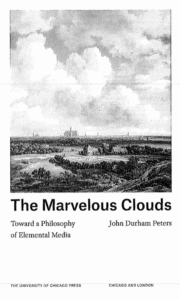
“Images and writing obey different logics.” — John Durham Peters, The Marvelous Clouds, p. 293
What Can a Medium Show Us?
Peters’ distinction between images and writing made me think about something I have increasingly encountered through my own interest in multimedia journalism: sometimes, writing can tell us what happened without allowing us to fully experience what happened. This is not because writing is somehow inferior to images, but because different media give audiences completely different ways of understanding the information presented to them.
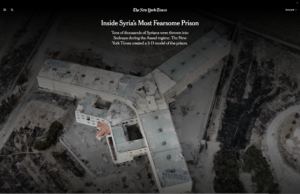
I saw this distinction particularly clearly in Inside Syria’s Most Fearsome Prison, a 2025 New York Times interactive investigation into Sednaya prison, where tens of thousands of Syrians were imprisoned during the Assad regime. The project, which included my New York Times mentor Anjali Singhvi on its reporting and production team, combines written reporting with photography, video, sound, and a 3-D reconstruction of the prison. The Times built that model using more than 130 videos filmed by its journalists, alongside interviews with former prisoners and prison officials.
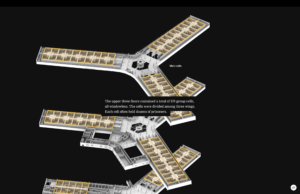
Imagine describing the prison entirely through writing. A reporter could tell us that the cells were extremely small, that prisoners were sometimes packed into cells designed for one person, or that the prison consisted of multiple wings. We could understand those facts. But understanding the facts is not necessarily the same as understanding the space.
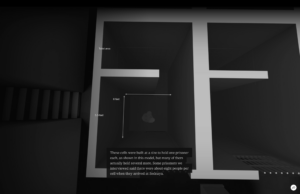
The 3-D model changes that. We can actually see the architecture and move our attention across the prison. The cramped cells become a spatial relationship rather than merely a measurement. The photographs similarly give physical form to descriptions of the prison and the people who survived it. And the videos and sounds of prisoners being freed introduce another dimension that written language cannot reproduce in exactly the same way: the experience of hearing the voices of people emerging from a place where they had been isolated from the outside world.
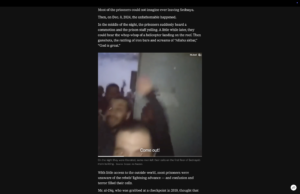
This is where Peters’ argument becomes particularly useful to me as someone interested in journalism. A multimedia story is not necessarily a written story with photographs and videos added afterward. The medium itself can become part of the reporting. A photograph can reveal a physical detail that a reporter might not think to describe. A map can reveal a geographic relationship. A 3-D model can communicate spatial relationships. Audio can communicate atmosphere, voice and emotion. Writing can provide context, chronology and explanation. Each medium allows the journalist to make a different aspect of the story visible, audible or understandable.
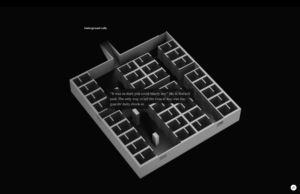
This also makes me think differently about the phrase “telling a story.” We often use it as though there is one story that exists independently of its medium. But Peters suggests that the medium shapes the way that story can be encountered. The Sednaya project is therefore not simply telling the same story through several formats. Each format reveals something that the others cannot fully reproduce.
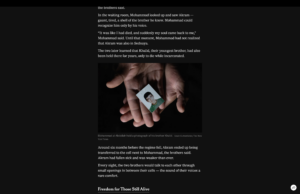
For me, this is one of the most exciting possibilities of multimedia journalism. The journalist’s job is not simply to decide what to say, but increasingly to decide how a reader should encounter what is being said. Peters’ observation that “images and writing obey different logics” reminds me that those choices are not merely aesthetic. They are choices about how audiences perceive, understand and remember the world.